> For the complete documentation index, see [llms.txt](https://docs.superlend.xyz/llms.txt). Markdown versions of documentation pages are available by appending `.md` to page URLs; this page is available as [Markdown](https://docs.superlend.xyz/products/discover/how-to-compare-yields.md).
# How to Compare Yields
Discover is designed to help you compare earning opportunities side by side before taking action.
This page explains what to look at when comparing yields on Superlend.
***
### Start With the Asset
Always compare yields within the same asset.
For example:
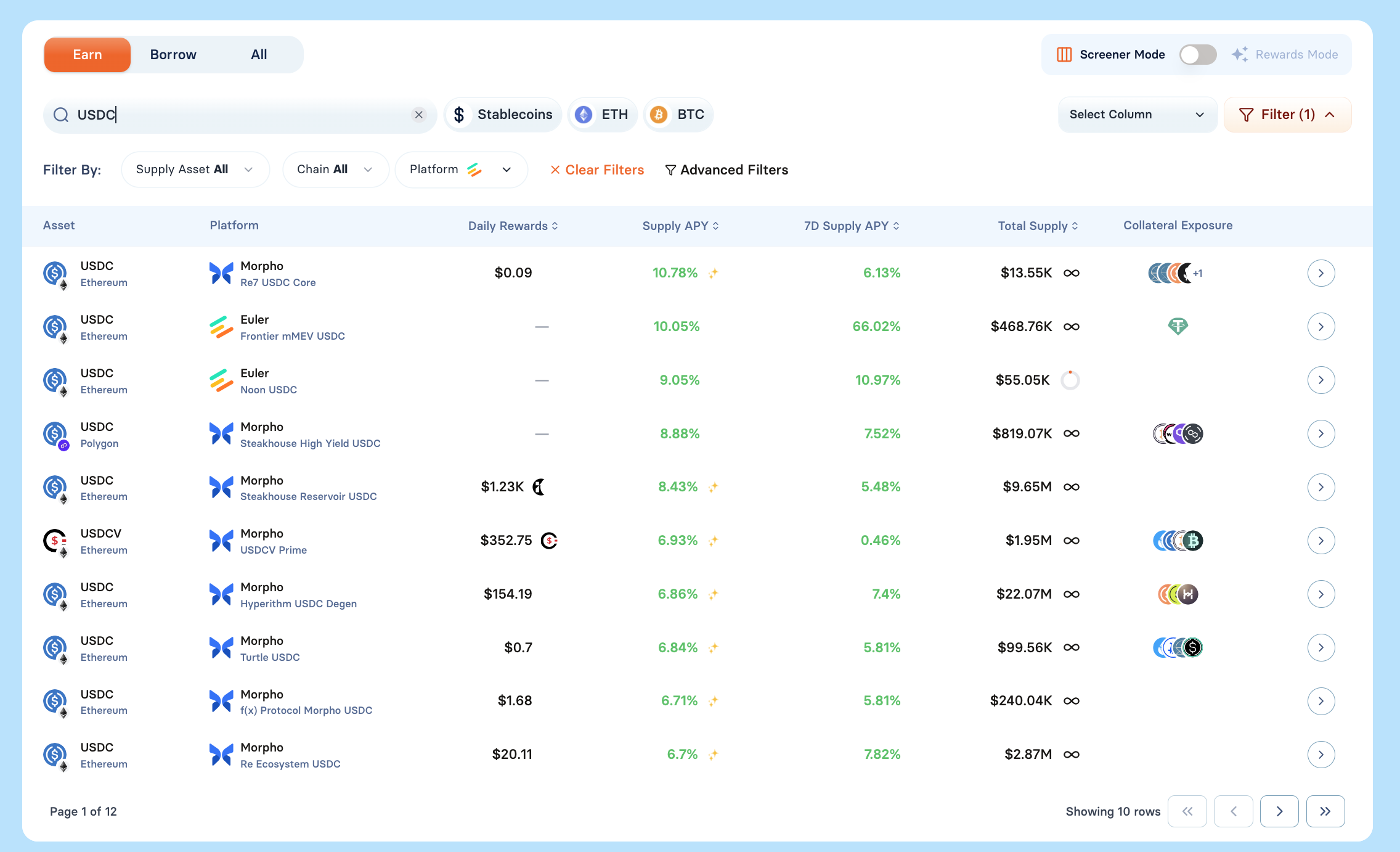
* Compare USDC opportunities with USDC
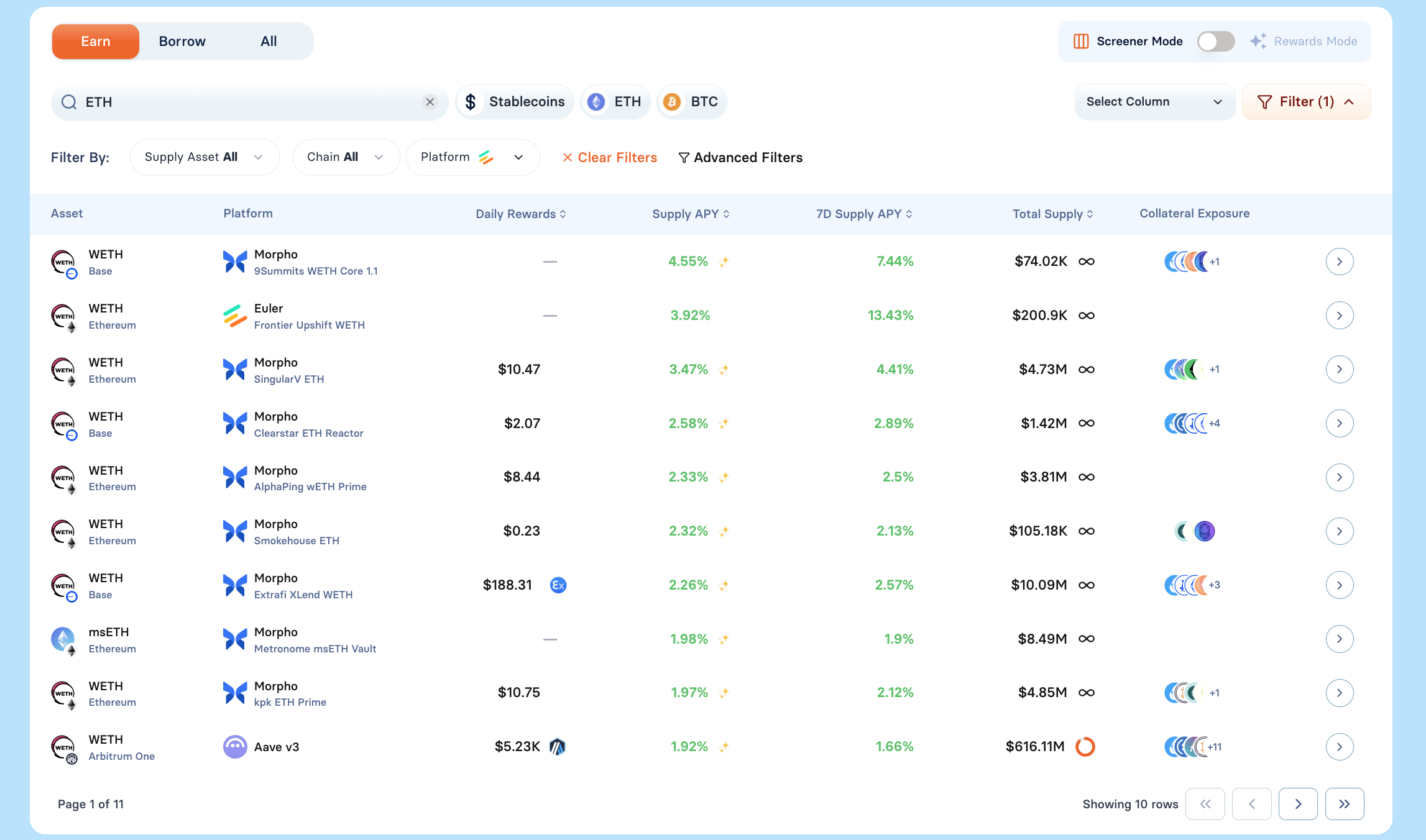
* Compare ETH opportunities with ETH
Different assets carry different risks and market dynamics.
***
### Check the Supply APY
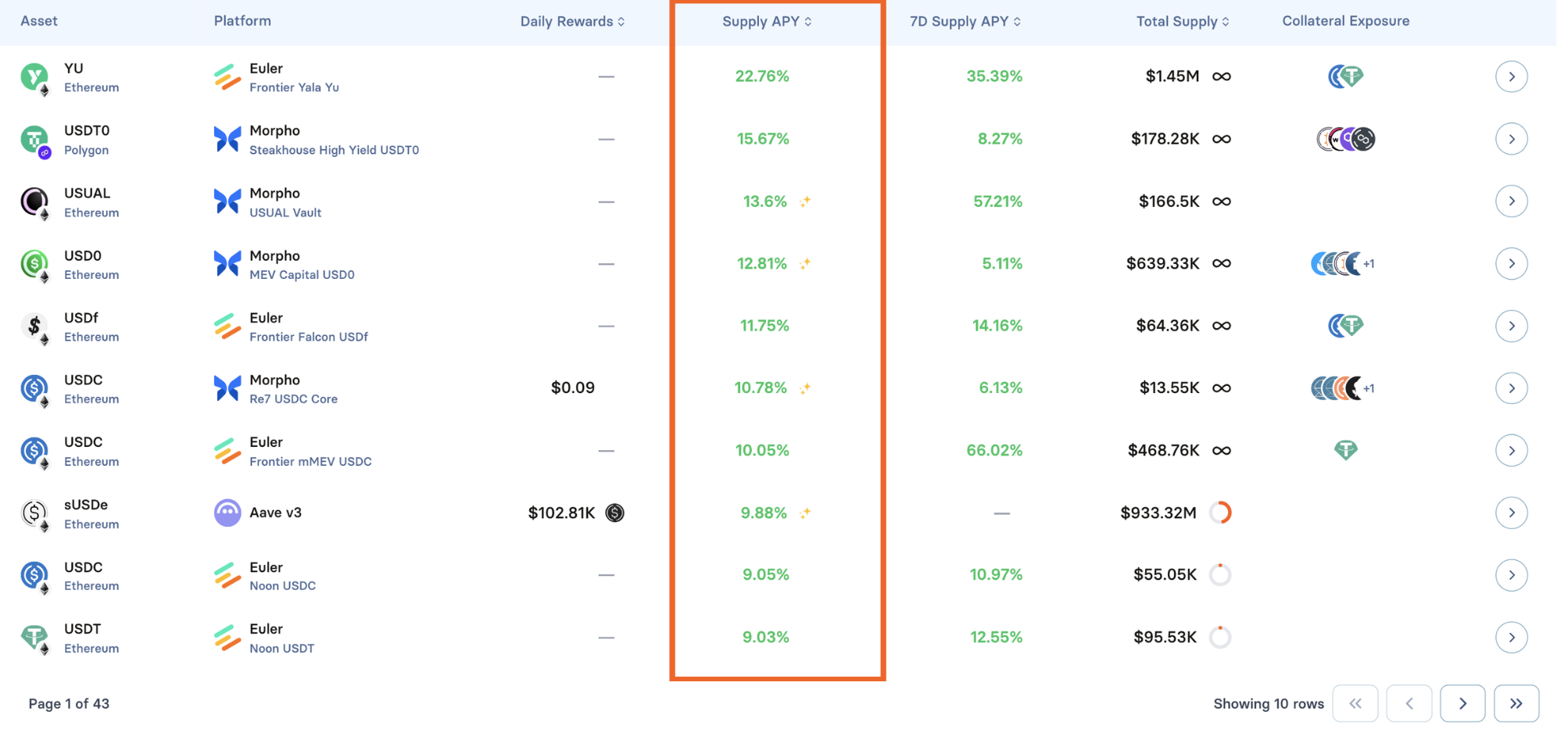
Supply APY shows the current annualized rate for supplying an asset.
* It reflects current market conditions
* It can change based on supply and demand
* Higher APY does not always mean better overall conditions
Use Supply APY to understand what the market is paying right now.
***
### Use the 7D Supply APY for Context
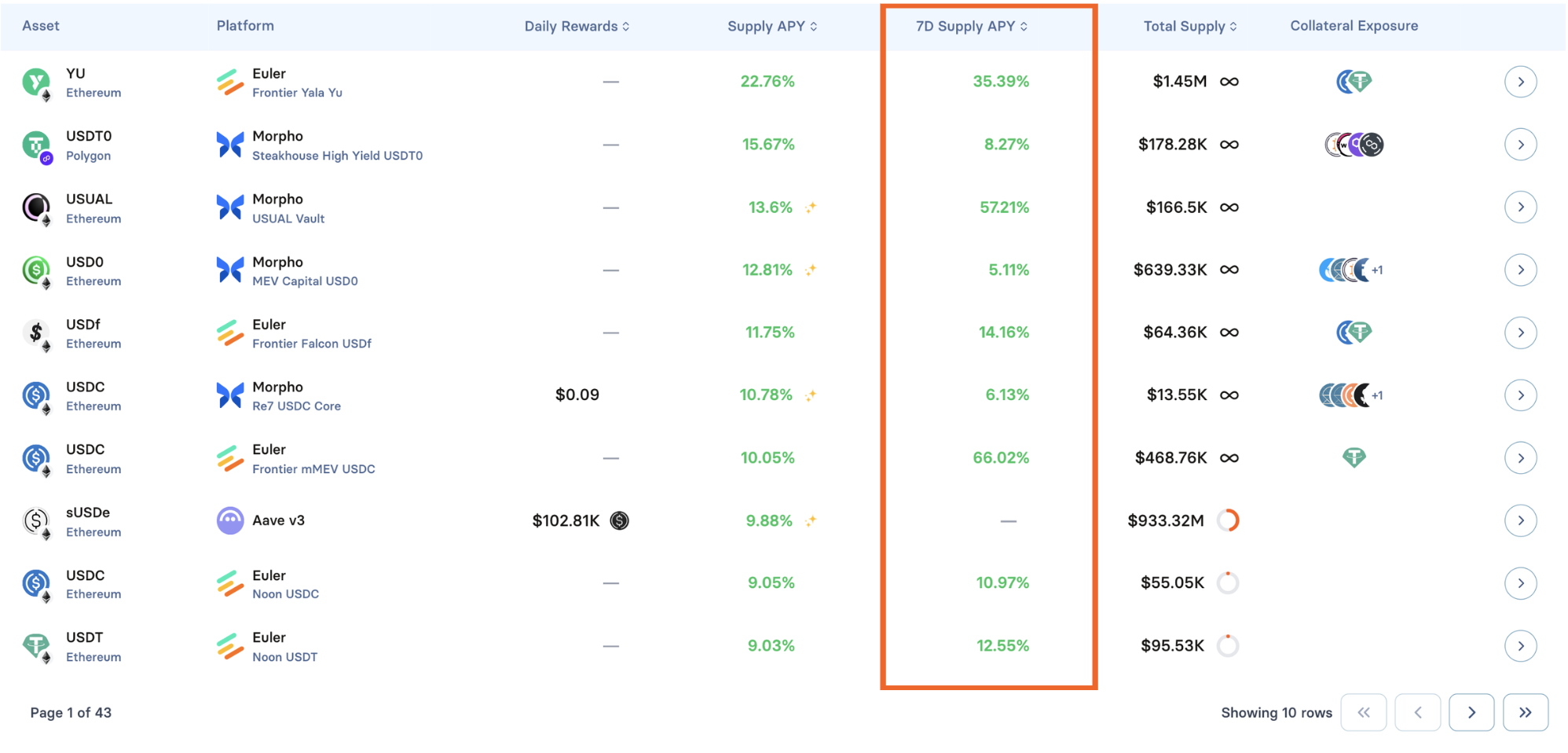
7D Supply APY shows the average supply rate over the last 7 days.
This helps you:
* Understand whether current rates are unusually high or low
* Avoid reacting to short-term spikes
* Compare stability across markets
A high current APY with a much lower 7D average may be temporary.
***
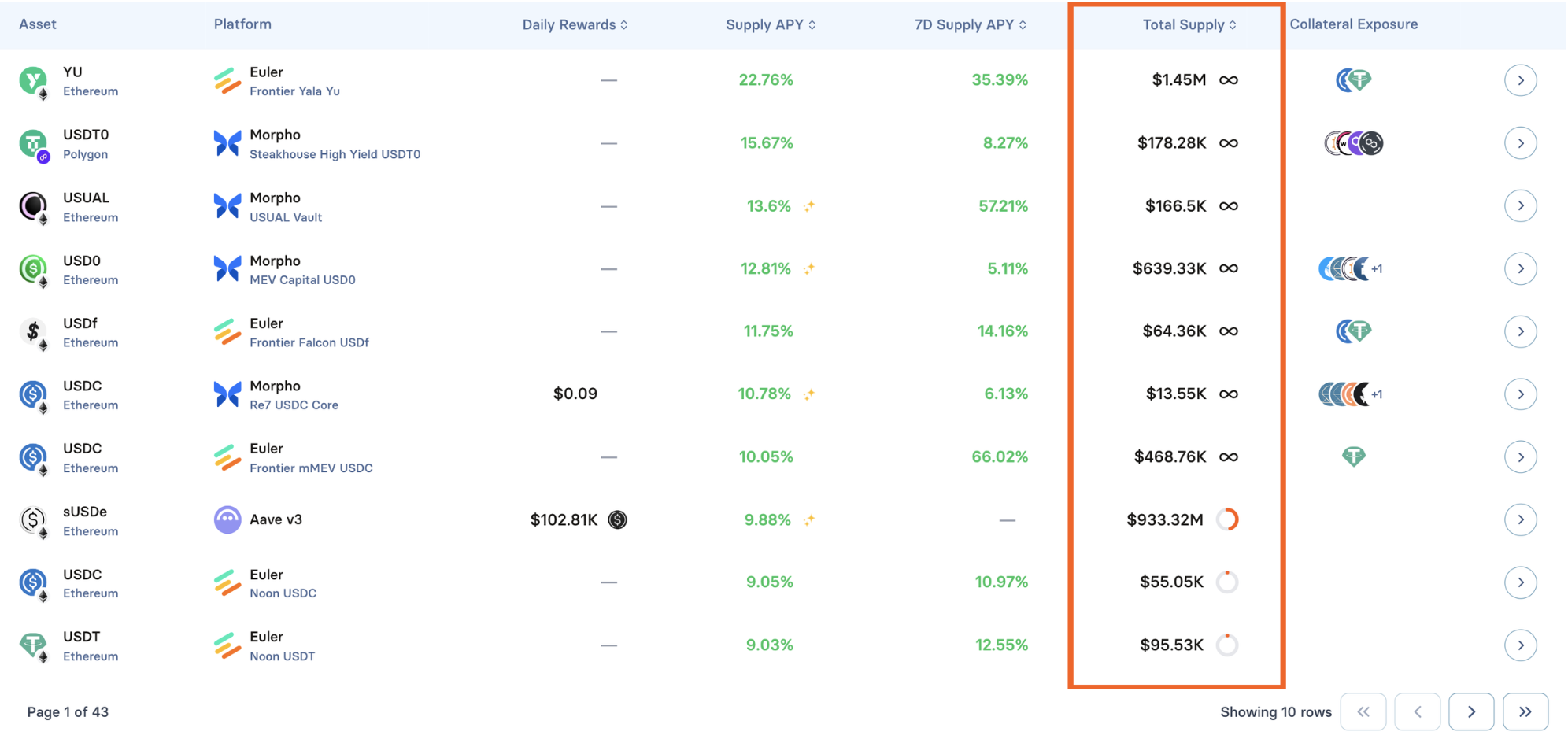
### Look at Total Supply
Total Supply shows how much liquidity is already in the market or strategy.
* Higher total supply usually means deeper liquidity
* Lower total supply may mean rates change more quickly
Liquidity can affect how stable yields are over time.
***
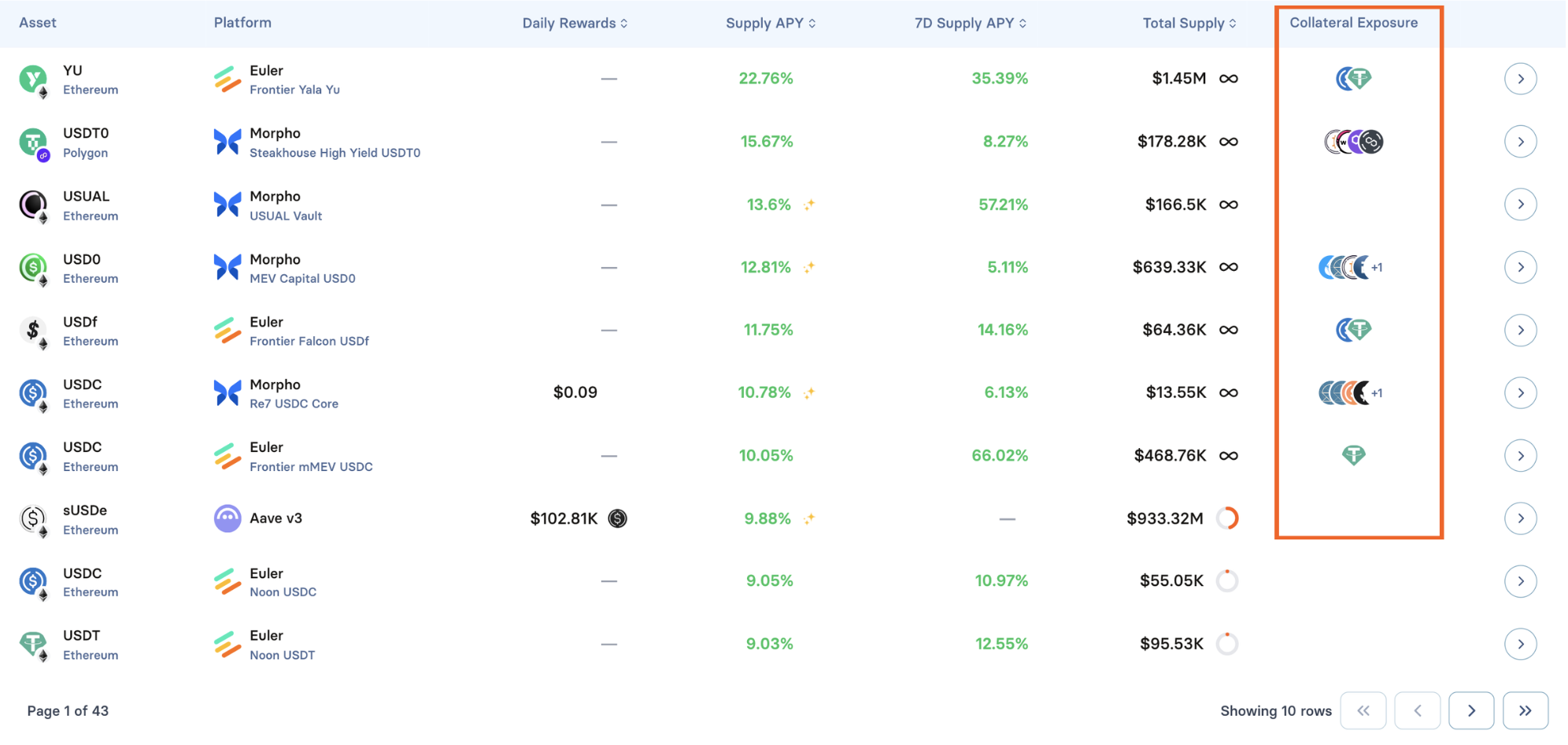
### Understand Collateral Exposure
Collateral Exposure indicates how supplied assets are being used within the market.
* Some markets rely more heavily on supplied assets as collateral
* Higher exposure can increase sensitivity to market activity
This is especially relevant if you plan to borrow later.
***
### Compare Like for Like
When comparing opportunities, use the same criteria:
* Same asset
* Similar total supply
* Similar market conditions
Avoid comparing yields across unrelated assets or markets without understanding the differences.
***
### Important Reminders
* Yields are variable and not guaranteed
* Higher yields may come with higher risk
* Rates can change quickly during periods of high activity